As cloud adoption accelerates, architects face a critical decision: selecting the right architecture style to meet specific business and technical requirements. Microsoft Azure offers a diverse array of architecture styles, which can be applied to any cloud, each tailored to different scenarios. This guide provides an overview of these styles, helping you make informed decisions for your cloud solutions.
Understanding Architecture Styles
An architecture style defines a set of constraints and patterns that shape the structure and behaviour of a system. These styles influence how components interact, how data flows, and how scalability and resilience are achieved. Azure’s architecture styles include:
- N-tier Architecture
- Web-Queue-Worker
- Microservices
- Event-Driven Architecture
- Big Data Architecture
- Big Compute Architecture
Each style offers unique benefits and is suited to particular use cases.
N-tier Architecture
The N-tier architecture is a traditional model that divides an application into layers, typically including presentation, business logic, and data access layers. This separation of concerns enhances maintainability and scalability.
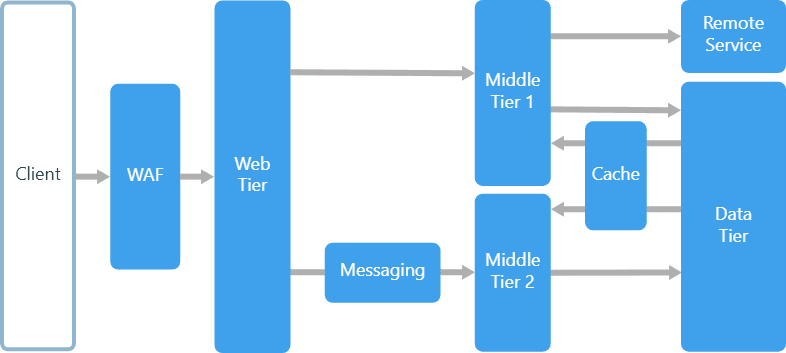
When to Use:
- Migrating on-premises applications to Azure with minimal changes
- Developing applications with a clear separation of concerns
- Building applications that require straightforward scalability
Azure Services:
- Azure App Service
- Azure SQL Database
- Azure Virtual Machines
Web-Queue-Worker
The Web-Queue-Worker architecture decouples the web front end from background processing. The web tier handles HTTP requests, placing tasks onto a queue, while worker roles process these tasks asynchronously.
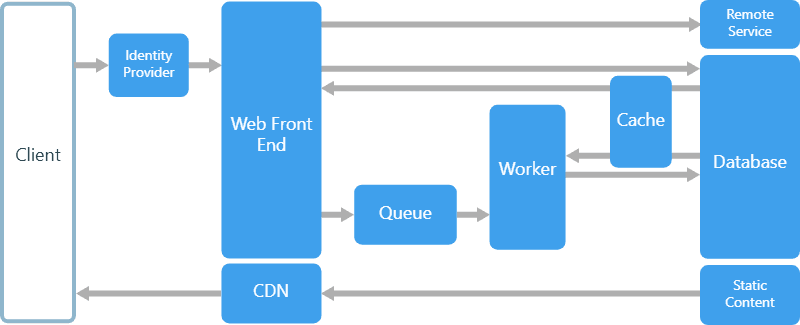
When to Use:
- Applications with long-running or CPU-intensive background tasks
- Systems requiring high scalability and responsiveness
- Scenarios where decoupling front-end and back-end processing is beneficial
Azure Services:
- Azure App Service
- Azure Functions
- Azure Queue Storage
Microservices Architecture
Microservices architecture structures an application as a collection of loosely coupled services, each implementing a specific business capability. This approach enables independent development, deployment, and scaling of services.
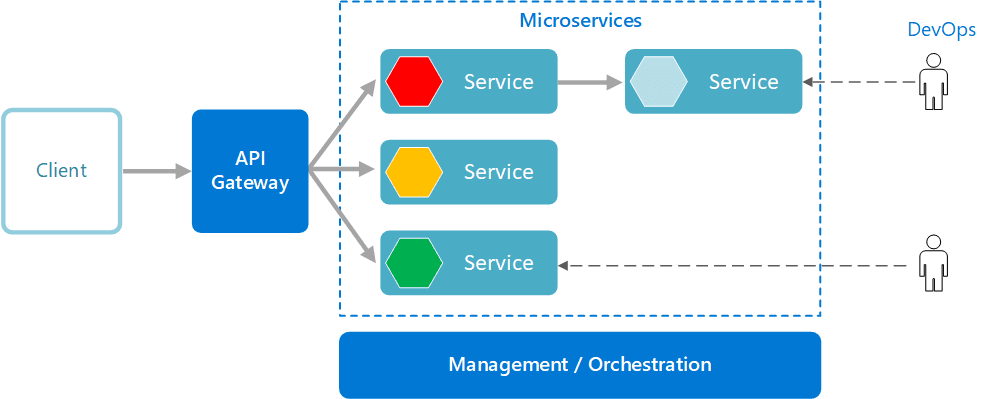
When to Use:
- Large, complex applications requiring high agility
- Teams practising continuous integration and deployment
- Applications needing independent scaling of components
Azure Services:
- Azure Kubernetes Service (AKS)
- Azure Service Fabric
- Azure API Management
Event-Driven Architecture
Event-driven architecture revolves around the production, detection, and reaction to events. Components communicate through events, promoting loose coupling and scalability.
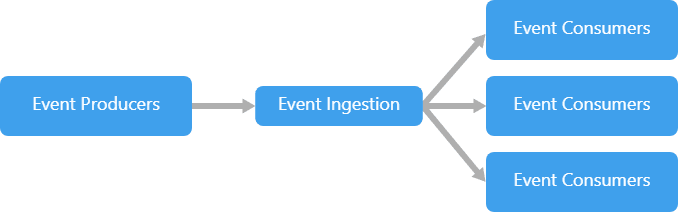
When to Use:
- Applications requiring real-time processing
- Systems with asynchronous communication needs
- Solutions that benefit from decoupled components
Azure Services:
- Azure Event Grid
- Azure Service Bus
- Azure Functions
Big Data Architecture
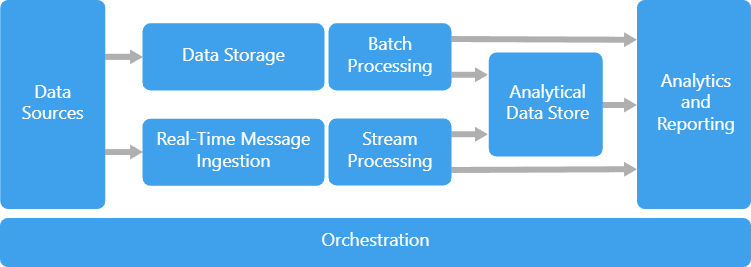
Big data architecture is designed to handle large volumes of data, enabling storage, processing, and analysis of vast datasets. It supports both batch and real-time data processing.
When to Use:
- Analysing large-scale datasets
- Implementing data lakes and warehouses
- Real-time analytics and reporting
Azure Services:
- Azure Data Lake Storage
- Azure Synapse Analytics
- Azure Databricks
Big Compute Architecture
Big compute architecture focuses on high-performance computing (HPC) tasks that require significant computational power, such as simulations, modelling, and complex calculations.
When to Use:
- Scientific simulations and research
- Financial modelling and risk analysis
- Rendering and media processing
Azure Services:
- Azure Batch
- Azure CycleCloud
- Azure Virtual Machines with HPC capabilities
AWS Equivalent Services for Azure Architecture Styles
| Architecture Style | Azure Services | AWS Equivalent Services |
|---|---|---|
| N-tier | – Azure App Service – Azure SQL Database – Azure VMs | – AWS Elastic Beanstalk – Amazon RDS – Amazon EC2 |
| Web-Queue-Worker | – Azure App Service – Azure Functions / WebJobs – Azure Queue / Service Bus | – AWS Lambda – Amazon SQS – Amazon EC2 or AWS Fargate |
| Microservices | – Azure Kubernetes Service (AKS) – Azure Container Apps / Service Fabric – API Management | – Amazon EKS / ECS – AWS App Runner / AWS Fargate – Amazon API Gateway |
| Event-Driven | – Azure Event Grid – Azure Service Bus – Azure Functions | – Amazon EventBridge – Amazon SNS / SQS – AWS Lambda |
| Big Data | – Azure Data Lake Storage – Azure Synapse Analytics – Azure Databricks | – Amazon S3 + Lake Formation – Amazon Redshift – Amazon EMR / AWS Glue |
| Big Compute | – Azure Batch – Azure CycleCloud – High Compute Azure VMs | – AWS Batch – AWS ParallelCluster – EC2 HPC Instances |
Choosing the Right Architecture Style
Selecting the appropriate architecture style depends on various factors, including application requirements, team expertise, scalability needs, and operational considerations. Here’s a simplified decision guide:
- Start with N-tier for straightforward applications or when migrating existing systems.
- Opt for Web-Queue-Worker when background processing is essential.
- Choose Microservices for complex, scalable applications managed by agile teams.
- Implement Event-Driven Architecture for real-time, decoupled systems.
- Adopt Big Data Architecture for large-scale data analysis and processing.
- Utilise Big Compute Architecture for compute-intensive workloads.
Each architecture style offers distinct advantages and aligns with specific use cases. By understanding these styles and leveraging Azure’s robust services, architects can design solutions that are scalable, resilient, and tailored to their organisation’s needs.
For more detailed information on Azure architecture styles, visit the Azure Architecture Center.